
Corcoran City Directory Collections by Year
The strongest Corcoran shelf sits in the Tulare Public Library Genealogy Room. Its official inventory names five R.L. Polk Hanford-Corcoran-Lemoore editions, and all five include Armona. Regional lines are a different matter. Each edition needs its own check before you assume Corcoran appears. The table keeps every collection tied to the place and access route the inventory itself supports.
| Collection | Years | Where Held | Access |
|---|---|---|---|
| R.L. Polk Hanford-Corcoran-Lemoore City editions | 1967, 1970, 1978, 1986, 1991 | Tulare Public Library Genealogy Room | Verified shelf; confirm visit and reference access |
| Kings-Tulare Counties regional directories | 1959-62; 1964-67; 1968-71; 1972-88; 1989-90; 1991-92; 1994-95; 1997; 1998-2005; 2007-10 | Tulare Public Library Genealogy Room; publisher not assigned in inventory | Confirm Corcoran inclusion edition by edition |
| Tulare-Kings Counties directory | 1997 | Tulare Public Library Genealogy Room; publisher not assigned | Verify Corcoran listing before relying on it |
| Kings County directory | 1999 | Tulare Public Library Genealogy Room; publisher not assigned | Verify contents and access in person |
| California State Library City and County Directories database | Result years not extracted | Online database and reference service | Search Kings, Corcoran, and related county terms |
| California State Library Telephone Books database | Result years not extracted | Online database and reference service | Search city and county variants |
| Kings assessment rolls | 1893-1946 | California State Archives and microfilm; not a directory | Catalog, reference, or microfilm research |
| Corcoran Sanborn fire-insurance maps | 1912, 1928, 1942 revision | Library of Congress discovery channels | Use for building and street context |
The record does not settle everything. No first or last printed Corcoran volume is established. Exact reverse-directory years remain unknown. The same goes for a full explanation of the missing years. One inventory line covering 1972-88 is rendered as 1888 by PDF OCR, an evident typo. Treat 1959-2010 as listed regional runs, not one uninterrupted series.
Regional Corcoran Directory Runs Need Checks
The regional shelf earns its keep because it reaches beyond the five named Polk editions. The inventory lists Kings-Tulare Counties runs for 1959-62, 1964-67, 1968-71, 1972-88, 1989-90, 1991-92, 1994-95, 1997, 1998-2005, and 2007-10. A Tulare-Kings Counties directory for 1997 also appears. So does a Kings County directory for 1999. Do not transfer the R.L. Polk name to a regional volume whose inventory only says "Directory." The publisher line matters. For each year, record the title page, the publisher, the county or city coverage, and any Corcoran pages. Do that before trusting a name or address. A regional title may carry Corcoran. But inclusion holds only when it is confirmed edition by edition.
Where Corcoran City Directories Can Be Read
Start with the official Tulare directory inventory. It is the clearest local shelf evidence for Corcoran. Use it to spot the five Polk editions and the regional lines, then confirm current access with the Genealogy Room. The inventory publishes no page image, no exact reverse-section list, and no complete visit schedule. Call or write before a long trip. The California State Library City and County Directories database and its separate Telephone Books database are the main digital checks. Search Kings, Corcoran, Hanford-Corcoran-Lemoore, and Tulare-Kings. The public interface does not display exact result years. Kings County Library advertises Archives Unbound, Biography, News, U.S. History, and OneFile. Its public page does not document a local directory, obituary index, reverse directory, or newspaper microfilm run. Confirm those holdings with library staff instead of assuming. For a visual starting point, the State Library database page displays the California directory collection used in this search.
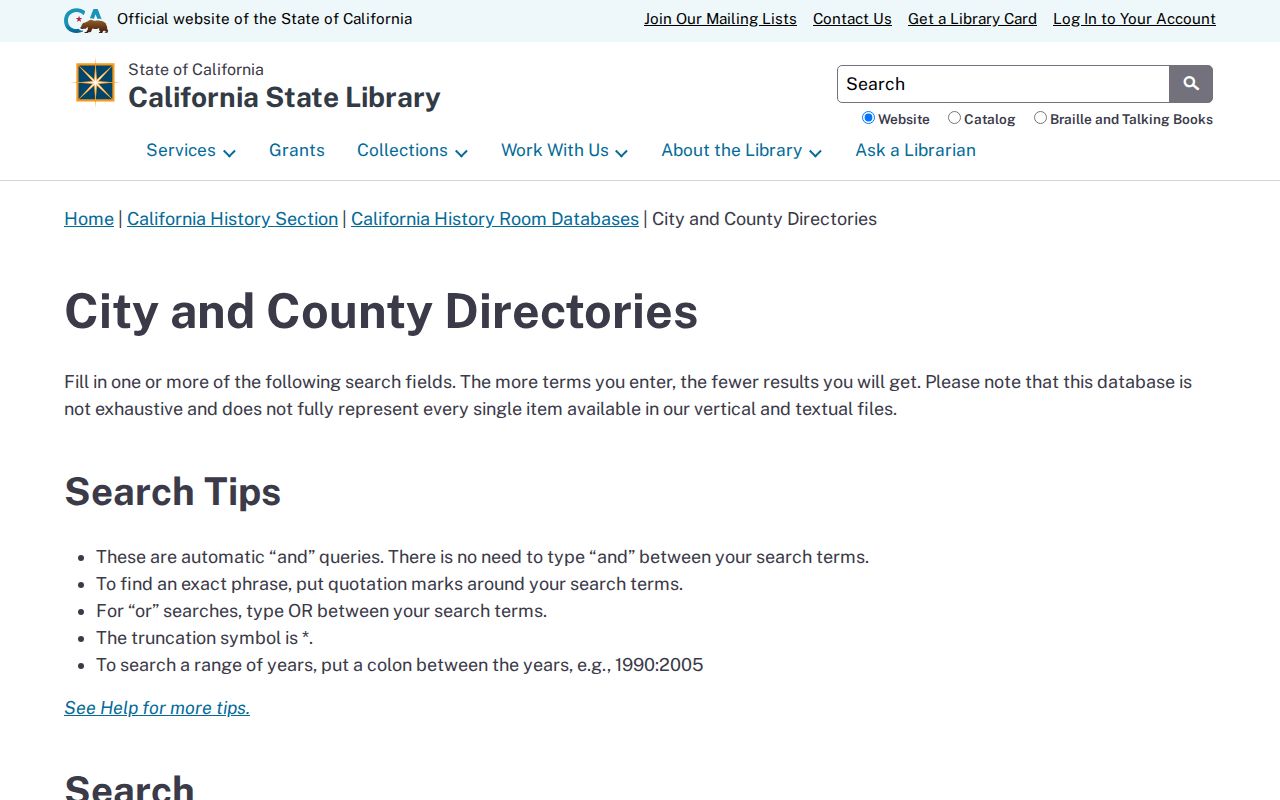
A search result is a discovery route, not proof that a particular Corcoran volume is digitized. Check the result record, then confirm the physical shelf when the year matters.
Reading a Corcoran City Directory Entry
No official source publishes a Corcoran page image. That limit shapes everything here. Do not invent spouse names, occupations, owner or occupancy marks, or other entry details from a generic directory model. Use the inventory below as a careful inspection checklist, then copy the Corcoran page exactly as printed.
| Name | Transcribe the printed name and distinguish a household line from a business line. Do not add a spouse or relationship that the page does not show. |
|---|---|
| Occupation | Record any trade or role only if the inspected Corcoran volume prints one. The available research does not verify a local format. |
| Spouse | Check whether a spouse field or parenthetical notation exists in that edition; do not assume it does. |
| Address | Copy the house number and street as printed, then note whether the line is residential, business, rural, or otherwise marked. |
| Owner or occupancy mark | Look for a legend or symbol in the actual volume. No local owner or occupancy convention has been verified. |
- Criss-cross directory
- A street-order section that can let a researcher work from an address toward a name. The Corcoran volumes that contain one still need inspection.
- Householder index
- A name-based entry point organized around household lines when a volume uses that arrangement. Confirm the heading and scope in each edition.
- Abbreviation key
- The volume's guide to shortened words and symbols. Read it before interpreting a line, and record the key with your notes.
A sample entry is evidence only for the volume and page inspected. A blank or missing line can reflect a move, an enumeration omission, a rural route, an institutional population, or a publication gap.
Corcoran Library Journey Behind Directories
Corcoran's library history gives the historical shelf a local setting. The branch began in February 1913 in the Storzbach building on Whitley. It then moved to the old school at City Park, beside Legion Hall. After that came the Neeb building on Whitley. In 1959 the branch reached permanent county quarters. Those moves can help a researcher date newspaper, building, and civic references. They do not prove that any particular directory stayed at every site.
| February 1913 | Branch begins in the Storzbach building on Whitley. |
|---|---|
| Later move | Old school at City Park beside Legion Hall. |
| Next location | Neeb building on Whitley. |
| 1959 | Permanent county quarters are established. |
The current Corcoran Branch is listed at 1001-A Chittenden Avenue, 559-852-4024, with public hours Monday through Thursday 9-6 and Friday through Saturday 9-1. The system reference contact is 559-852-4001 and askus@kingscountylibrary.org. Ask whether staff can confirm local-history material before relying on an unlisted holding.
The Kings County Historical Society at 14060 Hackett Street in Hanford, PO Box 564, 559-772-9334, preserves county history and shares photographs. Its public site has no item-level finding aid, research fee, name index, or appointment hours.
The society's public history source is useful for visual context around a Corcoran directory search.
Use photographs as clues to places, dates, and buildings, never as an unnamed-person index. Request a documented reference trail when a picture appears to match a directory address.
Tracing a Household Through Corcoran City Directories
Treat the five Polk editions as checkpoints. They are not a continuous annual record. A careful trace pairs the printed line with a census, map, or archive source and keeps every uncertainty attached to the right year.
- Start with the title page and abbreviation key, then select 1967, 1970, 1978, 1986, and 1991 as separate checkpoints.
- In 1967, copy the name, address, and every printed qualifier exactly. Mark the page or shelf reference and do not fill an absent field from memory.
- Repeat the same check in 1970, 1978, 1986, and 1991. Compare spelling, address, household lines, and any printed symbols without assuming the format stayed fixed.
- Pair the earliest directory checkpoint with the NARA 1950 Kings County search, whose Corcoran enumeration descriptions are bounded by Whitley, Letts, Sherman, Chase, and King streets.
- Test a change with assessment rolls, Sanborn context, deeds, or a documented obituary or cemetery lead. If the question becomes a modern one-person verification, use the separate Corcoran resident lookup workflow.
A name that vanishes from the Corcoran directory rarely has a single explanation. The person may have moved. They may have missed enumeration, relied on a rural route, lived in an institution, or landed in a publication gap. Weigh the address and the source year first. Only then draw a family conclusion. Regional volumes add one more wrinkle. Confirm Corcoran actually appears in that edition before treating an absence as meaningful.
1950 Census Boundaries for Corcoran Directories
The NARA 1950 Kings County search marks the federal census checkpoint. It falls just ahead of the first Polk edition. Corcoran's enumeration description ran along Whitley, Letts, Sherman, Chase, and King streets. Those street lines let you test whether a household fell inside the city area. Keep the distinction clear, though. A census schedule is not a city directory and never followed a publisher's editorial rules.
The 72-year access rule keeps 1950 the newest open census until 2032. So NARA's search works as a historical comparison point rather than a current resident lookup. It can anchor a surname. Household groupings and street context work too. Use them before the 1967 directory volume. The official NARA search page displays the schedule images and search tools.
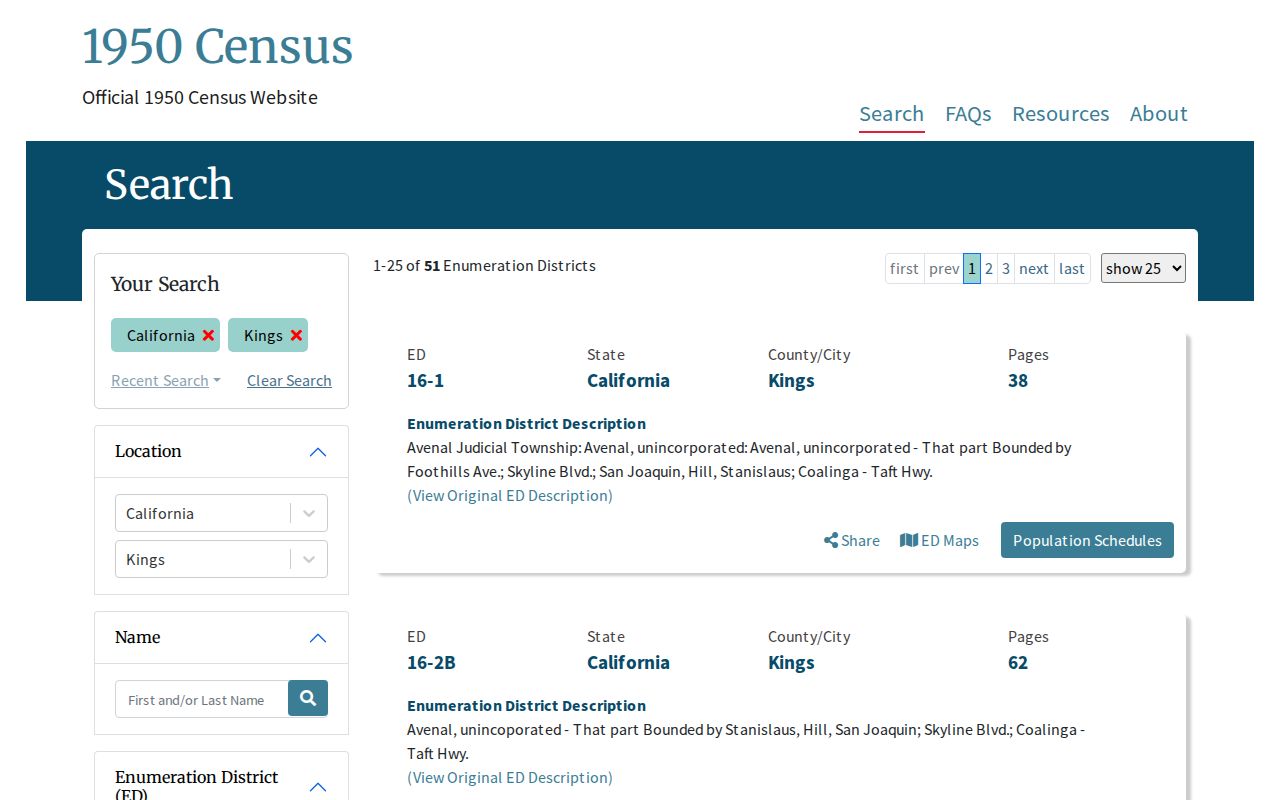
Log the census year, the enumeration boundary, and the directory year as three separate notes. That habit keeps a later directory line from being read backward as though it were a census result.
Archives Before the Corcoran Directory Shelf
The California State Archives offers a bridge around the printed Corcoran directory shelf. Kings assessment rolls span 1893 to 1946. Treasurer records run 1893 to 1944. Miscellaneous Kings records reach 1893 to 1969. None replaces a city directory. Still, they supply name and address context between census and directory checkpoints. Some microfilm came from the Genealogical Society of Utah. It may be reachable through FamilySearch centers or catalogs.
Kings County also reports saving its original county books from creation through 1977. Dusty, crumbling volumes were restored to museum condition. That is a preservation win. It is not proof that every Corcoran name or deed survives. The State Archives inventory lists no comprehensive Kings deed series. For the primary deed trail, rely on the Clerk/Recorder instead.
For the holdings route, consult the California State Archives county and city records collection.
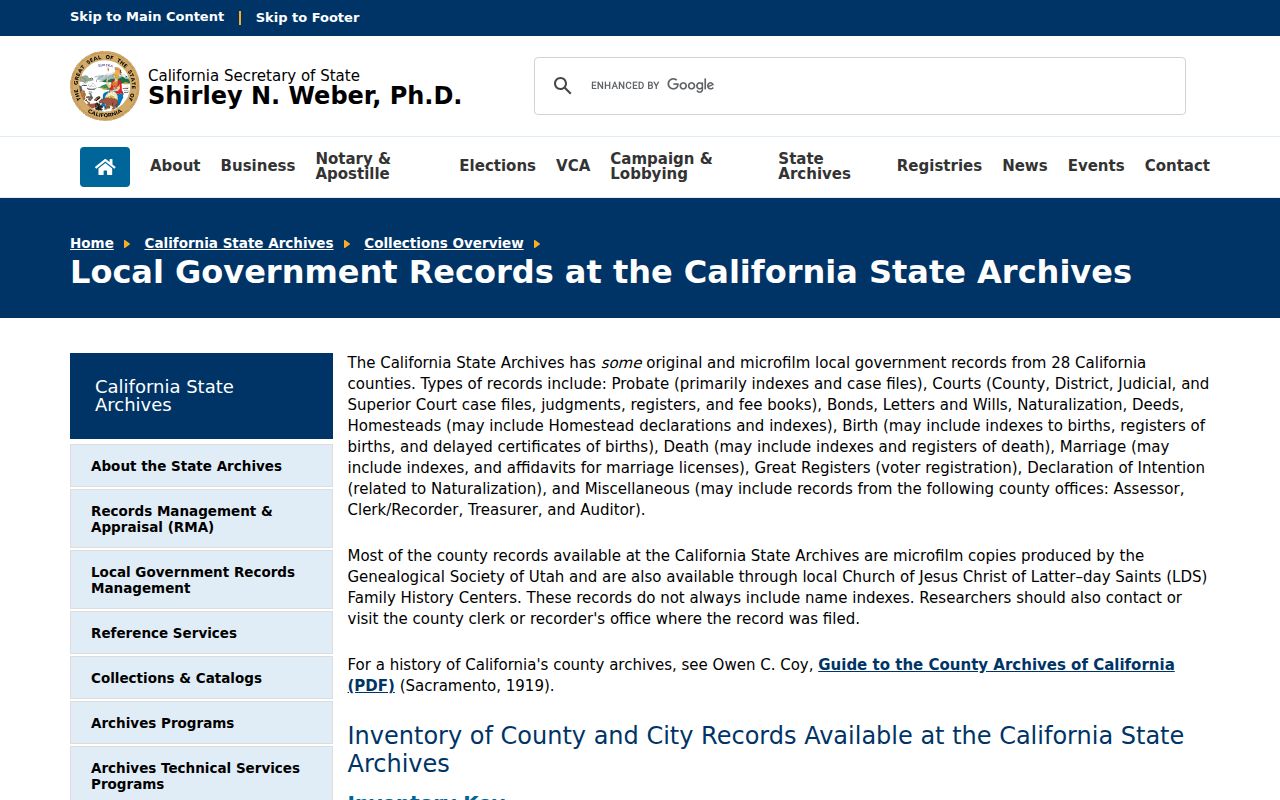
Jurisdiction matters here. Kings formed in 1893 from western Tulare County, so a pre-1893 Corcoran-area record may sit under Tulare in the catalog. Research from 1893 forward should test Kings first. Never carry a modern county label backward without checking the catalog.
Sanborn Numbers for Corcoran Address Context
Sanborn maps give a physical check on any Corcoran city directory address. Local coverage includes 1912 with 2 sheets. The year 1928 has 7 sheets. A 1942 revision also has 7 sheets. The sheets show building footprints, materials, uses, outbuildings, and street layout. They name no occupants. Use them to test place and structure, never to invent a household entry.
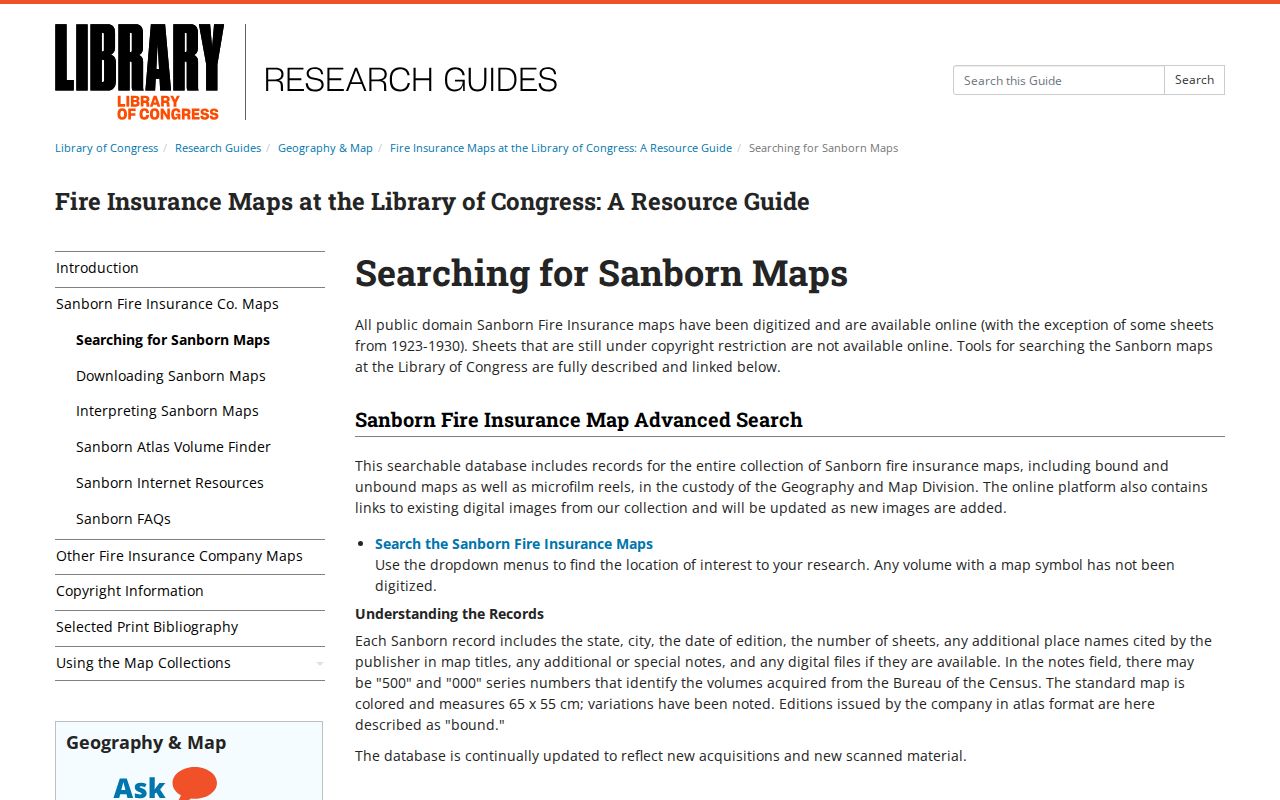
The Library of Congress Sanborn searching guide is the discovery route for these map records. It explains the collection along with its digitization limits. Some 1923-30 sheets are absent from the public-domain path. The Library of Congress guide page lays out the full searching process.
When a printed directory line and a map disagree, compare the edition year, street spelling, address changes, and jurisdiction before calling one source wrong. A map can show why an address makes sense without proving who lived there.